Assos usually brings to mind its Hellenistic-era ruins, but a small, unassuming mosque rising at the centre of Behramkale Village adds a page from a much more recent chapter of the city's history — the Ottoman period. Standing amid the village's fabric, interwoven with the ancient acropolis, the Hüdavendigâr Mosque is tangible proof of how different eras can coexist side by side here.
A Legacy of the Ottoman Period
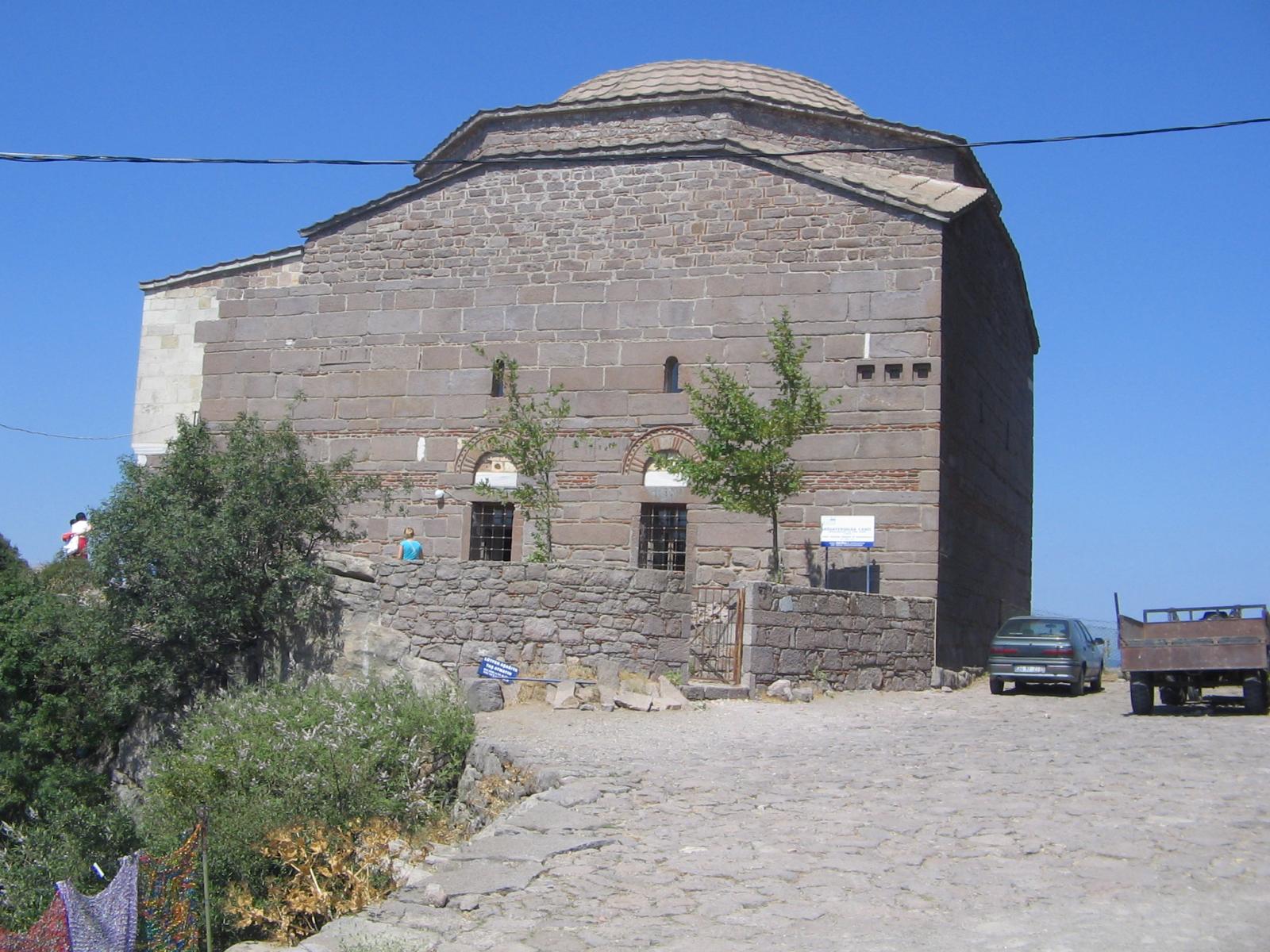
The mosque is said to have been built in the 14th century, in a period associated with the Ottoman sultan Murad I, popularly known by the epithet "Hüdavendigâr." If this dating is accurate, the mosque stands as one of the rare examples of early Ottoman architecture in Anatolia. With its plain stonework and modest scale, it offers a valuable reference point for the rural mosque architecture of its era.
Where the Ancient Meets the Ottoman
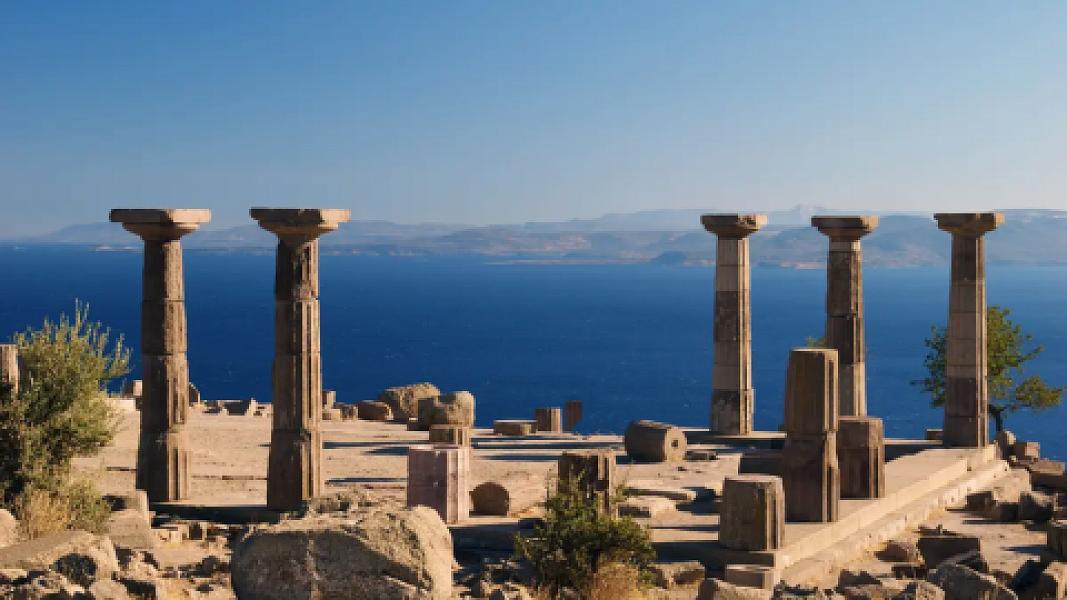
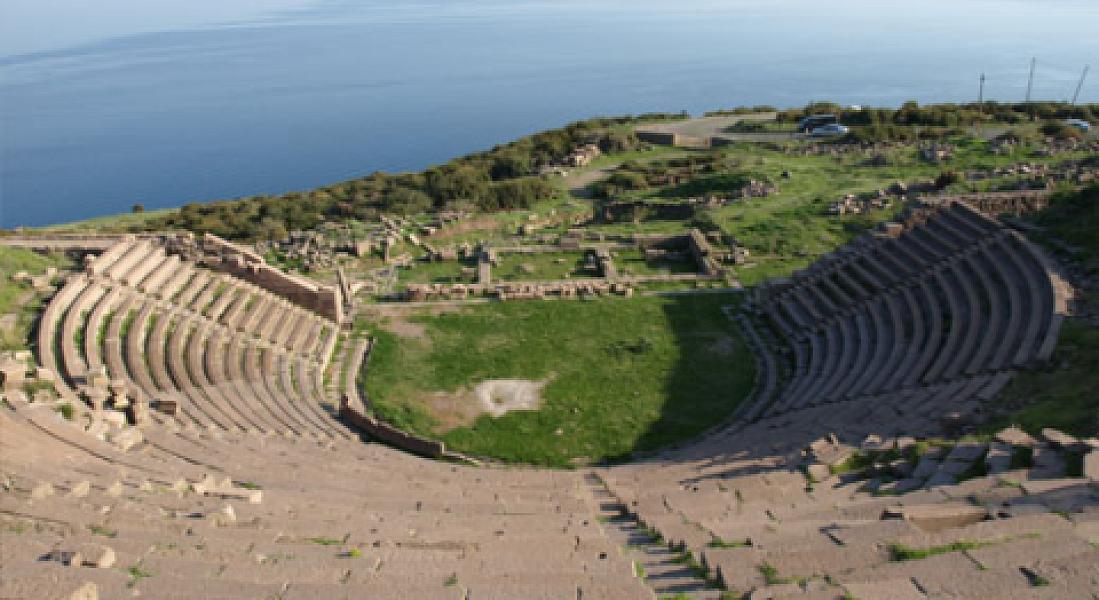
One of the mosque's most striking aspects is its location: it sits at the foot of the Hellenistic-era acropolis, right beside the remains of the ancient city walls. This proximity is a reminder that Behramkale is not simply an open-air museum belonging to a single era, but a living settlement that carries the traces of different civilisations across thousands of years. Being able to see the ancient temple ruins and the Ottoman-era mosque side by side in the same day is a rare way to experience Assos's historical layers first-hand.
Traces of Rural Ottoman Architecture
Unlike the monumental mosques of major urban centres, early Ottoman architecture in rural regions generally adopted a plain, functional language. The Hüdavendigâr Mosque is a small but valuable representative of this tradition: its walls built from local stone, its modest dome, and its unadorned façade reflect the practical approach of rural builders of the period, one that prioritised both material and need. This simplicity may well have contributed to the structure's survival across the centuries.
At the Heart of the Village
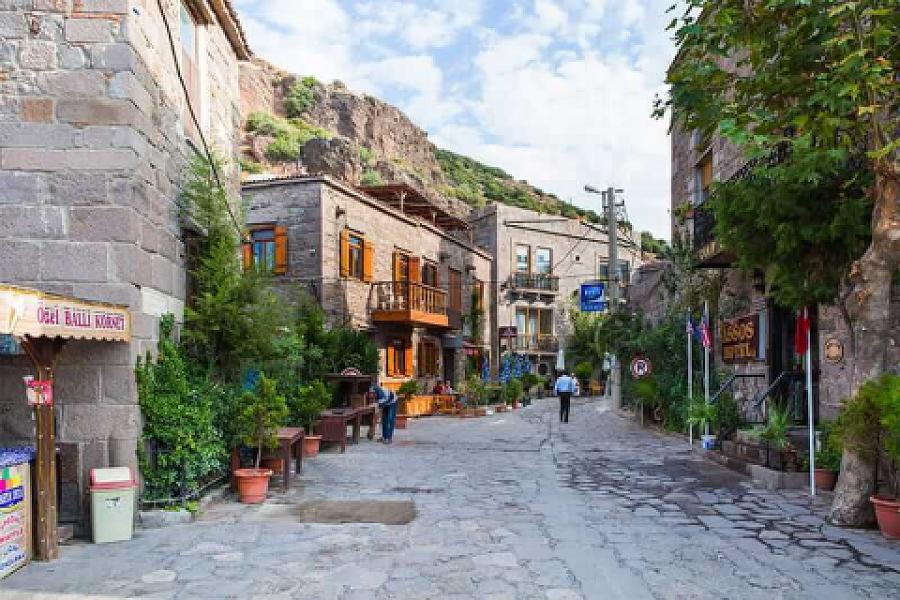
The mosque still stands at the centre of the village today, remaining part of everyday life. The small square around it is lined with local shops and coffeehouses, where villagers and visitors gather. The mosque's simple minaret also serves as a landmark you can spot from a distance while wandering the stone streets.
What to Keep in Mind When Visiting
As it is an active place of worship, a respectful manner and appropriate dress are important during a visit; outside of prayer times, it is generally possible to view it from the outside. Though not necessarily a planned stop, this structure, which you'll come across while wandering the village's narrow streets, becomes a natural part of discovering Behramkale's many-layered history.
While visiting the mosque, we also recommend taking a look at the small cemetery just beside it; the craftsmanship and inscriptions on the gravestones there carry quiet but valuable clues about the village's more recent history. These small details show just how rich Behramkale's history is, not only through its ancient ruins but through its Ottoman and later layers as well.
Reachable on a short walk from our hotel, this small but meaningful structure, which you'll encounter while wandering Behramkale's ancient streets, is a reminder that Assos is home not only to antiquity but to a settlement history that has continued across the centuries.