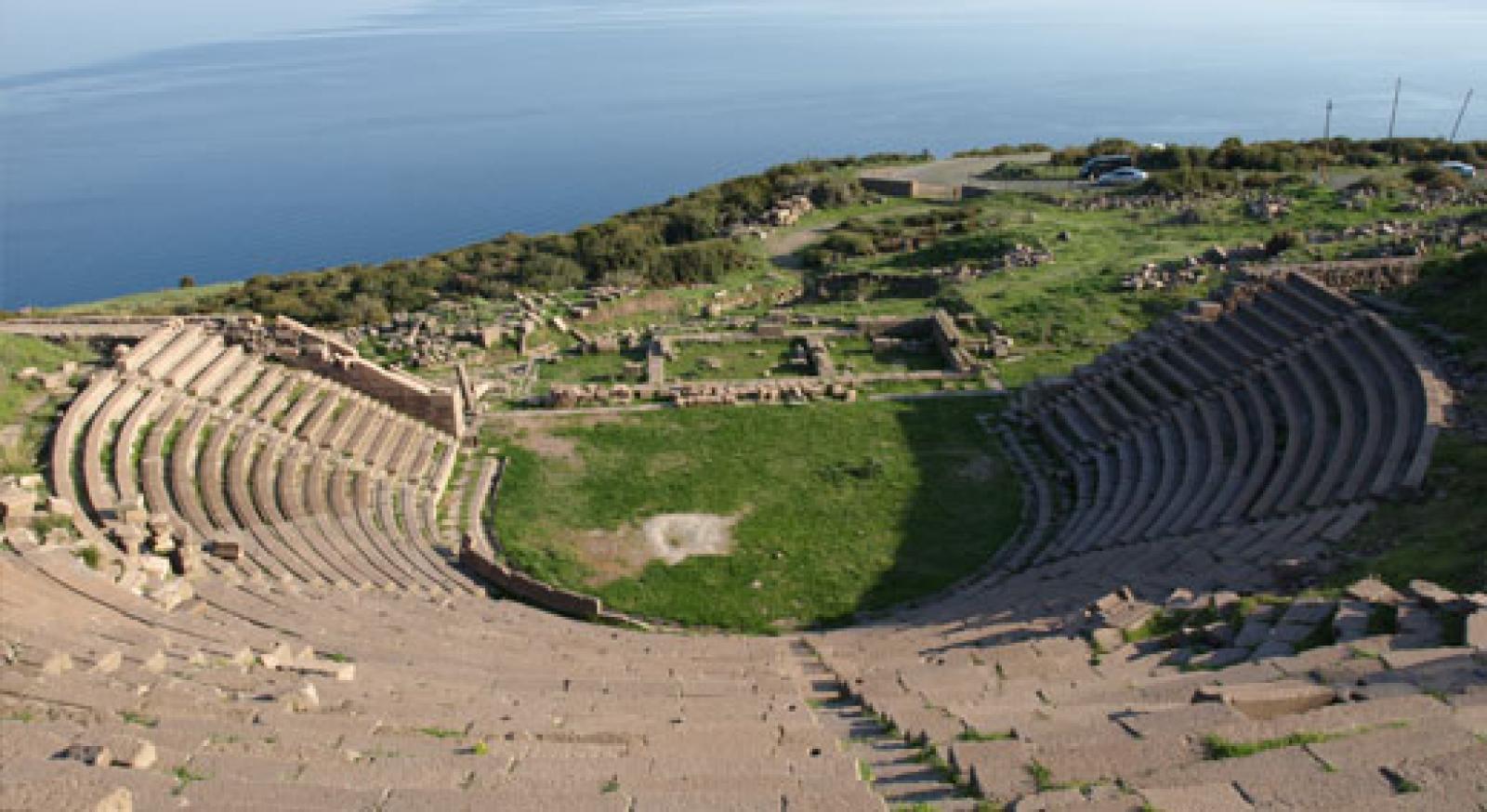
Carved into the slope of the Assos acropolis, the ancient theatre is one of the city's most striking and most photographed ruins. Its semicircular rows of stone seating, with the Aegean Sea and the island of Lesbos stretching out behind them, offer visitors a captivating union of ancient architecture and nature.
Hellenistic-Era Engineering
Built during the Hellenistic period, the theatre makes clever use of the natural slope of the acropolis — a striking example of how skilfully ancient architects worked with the terrain. The stone rows were arranged at a calculated gradient designed to carry sound clearly all the way to the topmost seats. What survives of these steps today reveals just how advanced the engineering knowledge of thousands of years ago truly was.
Shaped from Local Stone
The theatre's rows were cut from the local andesite and limestone found in abundance around the region — ancient builders could source their stone from right around the city, without having to travel long distances. The quarries around Assos are known to have held a particular reputation in the ancient world; the way ancient writers spoke of this region's stone with praise is a sign that Assos stone carried real value even in its own time. The skilled craftsmanship still visible in the theatre's rows is a tangible trace of this local stoneworking tradition.
Between the Stage and the Sea
What makes the theatre especially special is the way its stage is positioned: spectators could take in not only the performance itself but, at the very same time, the Aegean Sea stretching out behind it and the island of Lesbos on the opposite shore. In antiquity, this was likely a deliberate architectural choice — nature and the performing arts meeting within a single frame. Sitting on the stone steps today and taking in the very same view is a rare way to share the experience of ancient audiences.
Its Place in the City's Social Life
In ancient cities, theatres were not only venues for performances but also communal spaces where public assemblies gathered and important announcements were made. For a port and trading city like Assos, the theatre stood at the heart of both cultural and administrative life. With a capacity to seat thousands, it also offers a sense of the city's population and its importance in its time.
Visiting Today
Today, visitors can sit on the stone steps and take in both the historic texture and the unmatched view of the Aegean for as long as they like. Particularly in the later afternoon, the angle of the sunlight on the stone makes the theatre especially rewarding for photography. We recommend walking carefully among the steps and wearing comfortable shoes, as the ground can be uneven in places.
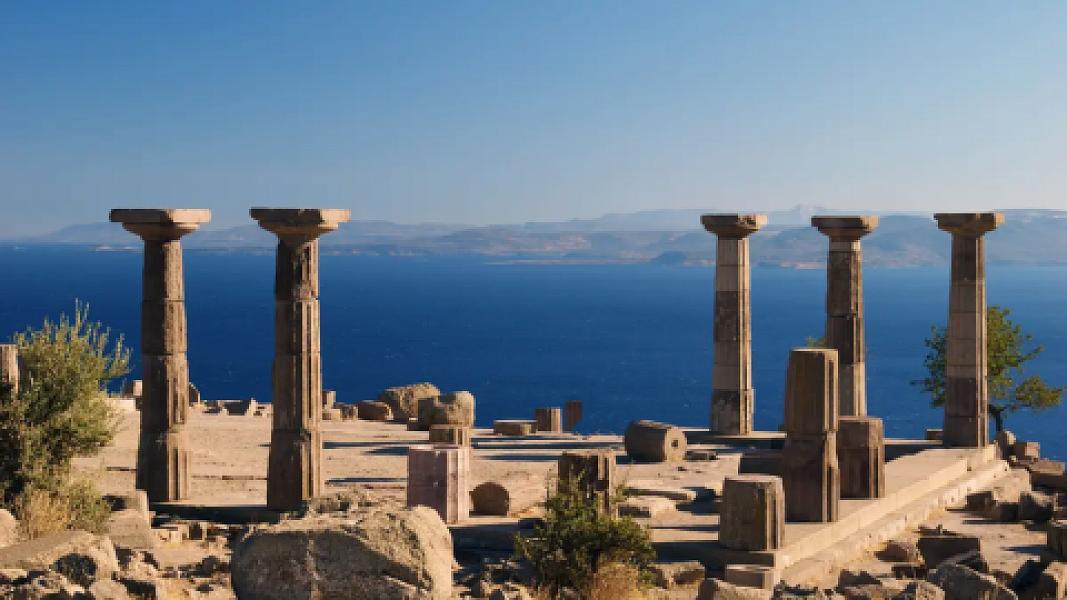
Just around the theatre, a short walk along the path continuing up toward the acropolis also brings you to the ancient city's other ruins — the agora and the city walls. This continuity lets you experience the theatre not in isolation, but as part of the city's broader fabric.
Reachable on a short walk from our hotel, this theatre will be one of the most memorable stops on your visit to the ancient city. Don't miss the chance to take in the very same view that audiences sitting on these same steps saw thousands of years ago.